
Why the wallsare changing.
Repainting every few years is a routine most homes know well. A generation of homeowners is now choosing surfaces built to last instead.
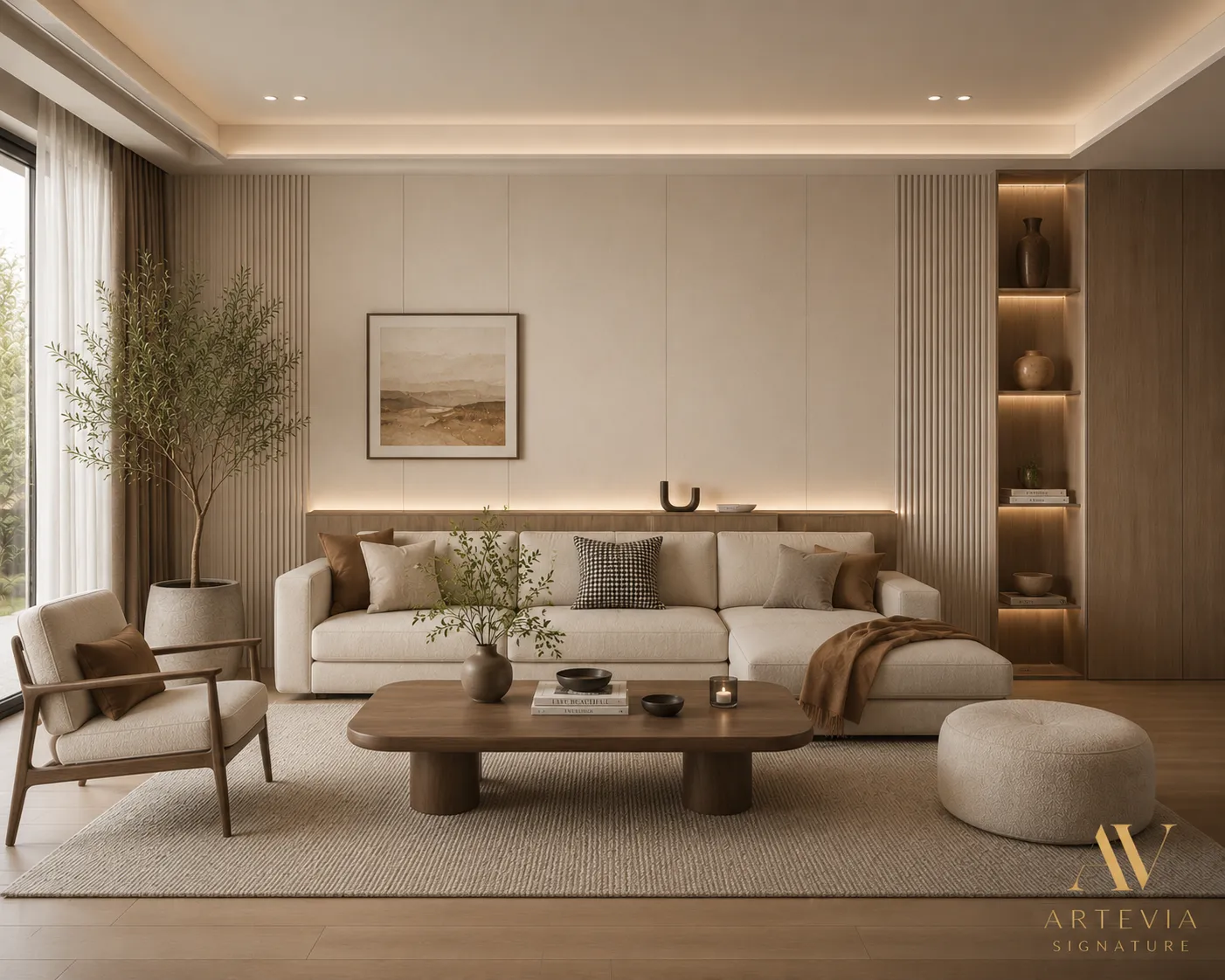
For decades, the routine has remained familiar. Every few years, walls are repainted, furniture is covered, rooms are disrupted, and the process begins again. For homeowners, the search is no longer simply for a fresh coat of colour. It is for a surface that can combine lasting performance with considered design.
Pakistan's climate makes that choice even more important. Heat, humidity, moisture and everyday wear can all take their toll on conventional wall finishes. Modern wall surfaces offer a different approach, designed to bring durability, easier maintenance and a more refined finish into the spaces we live and work in.
A wall should not be a subscription.
The change now moving through the country's most considered homes is not a new colour. It is a new material. The diatom wall panel is built on diatomaceous earth, the mineral skeletons of ancient algae, pressed into a technical board and finished with a surface cured by electron beam. No paint. No solvent. Nothing to off-gas, and nothing to repaint.
The core is microporous, which means the wall does something walls have rarely done here: it breathes. It absorbs humidity instead of swelling with it. It eliminates the release of formaldehyde and TVOC. It takes in what the room exhales. It inhibits E. coli and Staphylococcus aureus, shrugs off mold, and gives termites nothing to eat. In a country where the air inside a new house can be harsher than the air outside it, this is not a decorative argument.
But the decorative argument exists, and it is winning on its own. Fluted panels give a wall rhythm, with vertical shadows that move with the light from morning to evening. The fabric collection carries the softness of linen without its fragility; wood carries grain that stays faithful to the tree; leather brings the warmth of a study that has been read in for years. These are rooms that photograph the way magazines photograph rooms, without a stylist in sight.
The finest rooms are no longer painted. They are panelled.
The economics settle the matter. A painted wall is priced per repaint — the scaffolding, the smell and the bill return on schedule. A panelled wall is priced once: it installs over the existing wall, with no demolition and no drying time. After that, maintenance is a damp cloth. Measured over a decade, the expensive wall is the one you keep paying for.
There is something fitting in the fact that this shift is happening here, in homes built to be handed down. A wall that holds its face for decades belongs in a house meant to outlast its owners. Paint was always a season. This is a signature.