
The two-hourmakeover.
No demolition. No dust sheets. No smell. Notes from a morning in which a bedroom wall changed its life between breakfast and lunch.
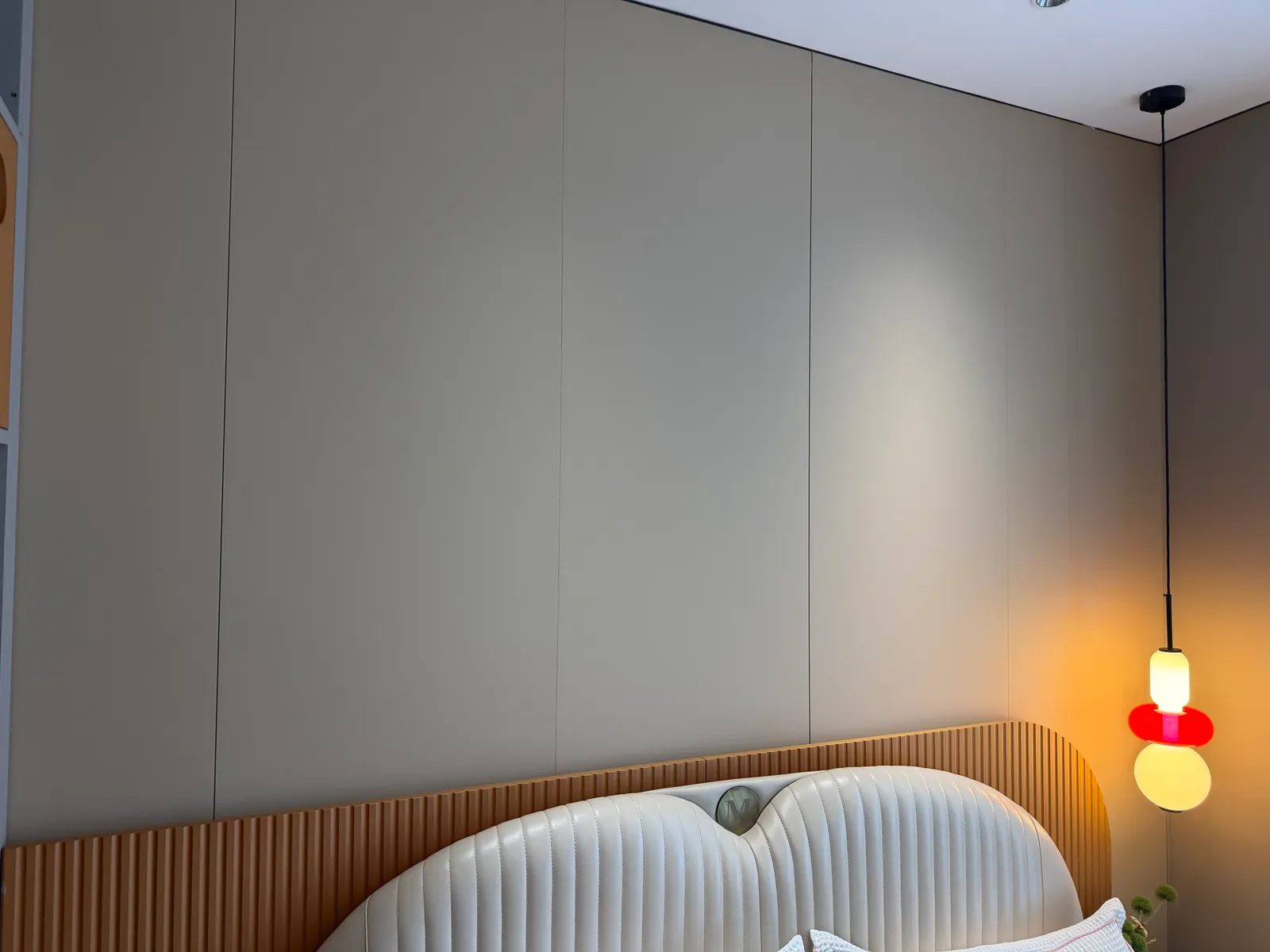
Nine in the morning. The bed is rolled to the centre of the room and left uncovered — there is nothing to cover it from. No grinder, no plaster dust, no buckets. Two installers carry the panels in flat, lean them against the wardrobe, and study the wall the way tailors study a client.
The wall itself — ordinary paint, six years old, a faint water mark near the window — is not going anywhere. That is the point. The panels are fitted over the existing surface, so the makeover begins without the part of renovation everyone dreads: the demolition, the debris, the week of living somewhere else. The room is never out of service. It is simply, for two hours, busy.
The room is never out of service. It is simply, for two hours, busy.
The first panel goes up at twenty past nine. This is the one that takes thought — plumb, level, squared against a laser line, because every panel after it inherits its discipline. Then the wall begins to assemble the way good walls should: piece by piece, joint by joint, each panel meeting the last in a seam you have to look for to find.
By half past ten the field is complete — flat panels above, a fluted band behind the headboard, the vertical shadows already doing their quiet work with the morning light. The trims go on last: bronze-lined edges, corner profiles, a recess for the light strip. Edges are where panel work is won or lost, and the accessories exist so that every edge finishes the sentence.
There is no drying time, because nothing is wet. There is no smell, because nothing here was ever painted — the surface was cured by electron beam in a factory in Foshan, not by solvent in your bedroom. The manufacturer's figure is ten to twelve square metres in under two hours, and the figure holds; this wall, at eleven, is dressed before the kettle has boiled twice.
Floors move at the same tempo. SPC planks lock together without adhesive — laid, clicked, walked on the same hour — which is why a full room, walls and floor, is a weekend story rather than a season of exile.
At eleven, the bed is pushed back. The water mark near the window is a memory nobody owns. The family eats lunch in a room that looks like it belongs to a different, calmer house — and the only evidence anything happened is a neat stack of offcuts by the door, waiting for the van.